Where the Hymn Meets the Huddle: Faith, Sunday Rhythms and Welfare in UK Rugby Clubs
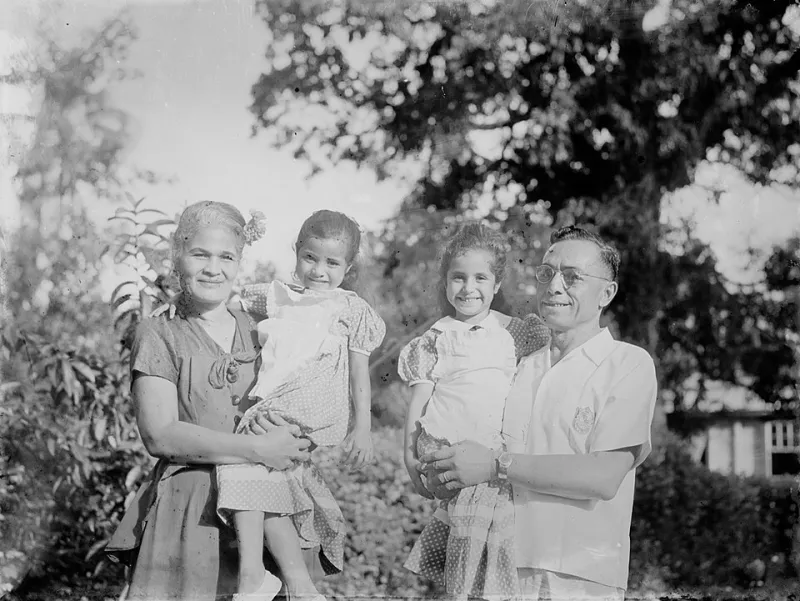
Photo: Collins, Tudor Washington, 1898-1970, photographer, CC BY 4.0, via Wikimedia Commons
Walk into any clubhouse in the country on a Saturday evening and you'll hear a dozen different stories. A fair few of them begin in Apia, Nuku'alofa or Suva. And for a good number of Pacific players, that story doesn't stop at the final whistle — it carries on the next morning, in a church hall three streets from the ground.
Clubs sometimes file that under "personal life" and leave it there. That's a mistake. Faith, for many Pacific players, isn't a hobby slotted in around training. It's the structure that holds the week together, the thing that makes a strange town feel less strange, and often the first place a player will go when something is wrong — long before they go to the coach.
None of which means every Pacific player you meet is devout, or that the club should start organising prayers. It means listening first.
Sunday Looks Different in a Pacific Household
A lot of UK rugby culture runs on Sunday mornings. Video review at ten, gym at eleven, under-16s kick-off at midday. Fine for plenty of players. For someone who has grown up with Sunday set aside for worship and family, that schedule can feel like a choice nobody should have to make — club or church.
In Tonga and Samoa particularly, Sunday observance is woven into the ordinary rhythm of life. It's not unusual for a player to have grown up with three services in a day, a big family lunch, and a strict no-work, no-sport rule that everyone in the village understood. Fiji, too, has strong church traditions across Methodist, Catholic and other congregations. Many Pacific players arriving in Britain will look for a church within weeks, often before they've found a decent barber.
In October, many families mark White Sunday — Lotu a Tamaiti — when children lead the service. It's one of the most important dates in the calendar and it lands right in the middle of the season.
The Club Doesn't Need to Lead — It Needs to Make Room
The best thing a club can do here is small and unglamorous: ask, then adjust.
Ask a new player, in a private conversation and not in front of the squad, what their week looks like outside rugby. Whether they'd like help finding a congregation. Whether Sunday morning sessions are workable. Then write the answer down somewhere the coaches will actually see it, alongside the injury notes and the contact details.
Adjusting is usually cheaper than people expect. Move Sunday video review to a Wednesday evening. Record it and send a link. Rotate gym slots so nobody is permanently missing the session that matters to them. None of that weakens a programme. It signals that the player is a person the club has thought about.
Finding a Congregation Without Steering Anyone
If a player asks for help finding a church, that's a straightforward practical task. A welfare lead can ring two or three local congregations, ask whether they have Pacific members or a minister with connections to the islands, and pass the details on. A word of warning on the phone can matter more than any leaflet, particularly for a player who is used to a big, warm, noisy church and finds a small, quiet English chapel a shock to the system.
Sports chaplains are another option. Sports Chaplaincy UK has volunteers attached to clubs and communities across the country, and they're generally very good at being present without pushing. That neutrality is worth a lot.
What a club should not do is steer. Don't tell a player where their faith "should" sit. Don't hand-pick a denomination based on what you assume about the islands. Don't invite a minister to speak at a club dinner and assume every Pacific player in the room will be delighted.
Assumptions Worth Leaving at the Door
A short list, because these come up again and again.
Not every Pacific player is religious. Some are, deeply. Some have complicated histories with church. Some are atheist. Judge each person by what they tell you.
Not every Pacific player wants to lead the grace at the club dinner. A player who is quiet about their faith at home may find being asked to perform it for a room of strangers uncomfortable.
Not every Pacific player drinks kava, and not every Pacific player wants a kava circle organised on their behalf. The same applies to the haka, the songs, the food nights. Offer, offer well, then let it go if the answer is no.
And please don't assume a Pacific player is the club's spiritual barometer. Nobody's welfare improves by being made into a mascot.
Small Things That Signal Respect
- Put Sunday commitments in the player's file, not just in someone's head.
- Ask before scheduling anything on a Sunday morning that isn't a fixture.
- Keep a list of local congregations and chaplains, updated each season.
- Make sure at least one person at the club can be contacted when a player is in crisis and doesn't want to talk to the coach.
- If a player is bereaved, remember that a funeral back home may mean a long flight and a long absence. Plan for it rather than resisting it.
Where Faith Sits in a Welfare Plan
Faith isn't a replacement for a welfare plan. It won't solve a bad contract, an unsafe house or a club that's stopped paying on time. What it can do is give a player a second network — people who notice when they go quiet, a place to be on the hardest day of the week, and a reason to get out of the flat.
Clubs that understand this tend to find the rest of the welfare conversation gets easier. The player who knows the club respects their Sunday is a player more likely to ring the welfare lead on a Tuesday when something's actually wrong.
Which is, in the end, the whole point.