When the School Bell Rings: Taking Pacific Rugby into Classrooms Without Turning Players into Showpieces

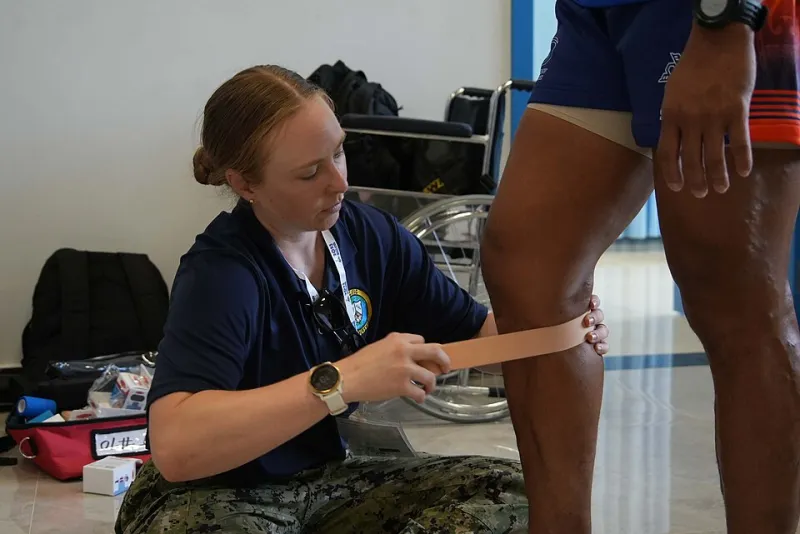
Photo: bullitt50d, CC BY 2.0, via Wikimedia Commons
A school assembly can be a lovely thing. Thirty minutes of rugby stories, a few passes in the hall, a sea of Year 6 faces asking whether you’ve met anyone famous. But if you’re the club community officer organising it, and you’re taking Pacific players along, the invitation deserves more thought than a quick email and a minibus booking. Because there’s a fine line between sharing culture and putting people on display.
The ask usually lands innocently enough. A local primary wants a “cultural rugby session”, or a secondary school’s PE department fancies a bit of Pacific flavour for enrichment week. The club says yes because it’s good community work, the players say yes because they want to help, and everyone turns up. But without care, the players can end up as exhibits: a quick showcase of exotic difference before the bell goes. That’s not community outreach. That’s a school trip with a person as the artefact.
Start With the Player, Not the Invitation
The first conversation shouldn’t be with the school. It should be with the players. Ask whether they actually want to do it, what they’d feel comfortable sharing, and what they’d rather leave at home. Some Pacific players love running a ruck pad session with kids. Others would rather talk about growing up in South Auckland or Suva, or demonstrate a haka, or just coach passing. Some don’t want to be the “culture guy” at all — and that’s fine. A player who is asked to perform their heritage on demand every other week will tire of it quickly.
Make it clear that saying no won’t be held against them. Clubs are good at accidentally creating obligations. A player on a modest contract might feel that school visits are part of the job, even if nobody has said so. Say it out loud: this is voluntary, it’s paid, and you can opt out at any point.
Consent Is More Than a Signature
A consent form is necessary, but it’s not the whole story. Players need to know what they’re consenting to: how long the session runs, what year group, whether there’ll be photos, who’ll be in the room, and what the school expects them to say. If the plan is to talk about Pacific island life, be specific. Will they be asked about family, faith, food, language? Are there topics — like migration, money, or family pressure — they’d rather avoid? Give them the chance to shape the brief before the school does.
And consent should be ongoing. A player might agree in September and feel differently by November. Check in again. It’s not a nuisance; it’s basic respect.
Safeguarding Isn’t a Box-Ticking Exercise
Schools have safeguarding leads and DBS checks for a reason. Make sure the club’s safeguarding officer is involved from the start, not asked to sign something the night before. Players should know who the school’s designated safeguarding lead is, what the ratios are, and how to raise a concern if a child says something worrying. Pacific players are often warm, open and quick to build rapport — which is brilliant, but it also means they need clear boundaries. No one-to-one time out of sight, no private messaging with pupils, no lifts home. The usual rules apply, and they should be explained in plain English, not buried in a policy PDF.
Pay People Properly
Here’s a sentence that shouldn’t need writing in 2026: don’t ask players to do professional community work for free. Schools often have small budgets, and clubs often have smaller ones. But if a player is giving up an evening, travelling across town, and delivering a session, they should be paid. That might be a modest session fee, or it might be time back in lieu. What it shouldn’t be is a vague promise of “exposure” or a sandwich. Community work is work. Paying players also protects them: it makes the arrangement professional, sets expectations, and stops the school treating them as a free novelty.
Choose Activities Players Actually Want to Lead
A good school session doesn’t need a cultural performance. It needs a plan. Ask players what they’re good at and what they enjoy. Some will want to run a touch rugby game. Some will want to talk about teamwork and discipline. Some will want to teach a few words of Samoan or Tongan, or show a short video of a village game. Others will want to answer questions about what it’s like to move to the UK. All of that is valuable. None of it needs to be a floor show.
Avoid the temptation to build the session around “demonstrating Pacific culture” in a way that feels like a museum tour. Culture isn’t a costume. If a player wants to share a hymn or a haka, great — but let them lead it, explain it in their own words, and make sure the school understands it’s not a party trick. The best sessions are the ones where the player is a coach, not an attraction.
Check the Welfare Weather After
School visits can be emotionally tiring. A player might spend an hour answering questions about home, family and the Pacific, then get on a bus and feel flat. Build in a debrief. Ask how it went, whether anything felt uncomfortable, and whether they’d do it again. If a player is already dealing with homesickness or family pressure, a school session about island life might land differently than expected. That doesn’t mean cancel it — it means check in.
Also think about the practical stuff: travel time, food, whether they’ll miss training, whether the session clashes with a welfare appointment. A small gesture like a lift home or a decent meal afterwards goes a long way.
Build a Relationship, Not a Photo Op
The strongest school partnerships aren’t one-off assemblies. They’re term-long links: a player mentoring a Year 10 group, a club running an after-school touch session, a teacher bringing pupils to a match. That kind of relationship takes time and consistency, and it’s far more valuable than a photo of a Pacific player holding a rugby ball in front of a whiteboard.
So before you say yes to the next school invitation, ask yourself a simple question: are we building a relationship, or are we putting on a show? If it’s the latter, go back to the players, go back to the school, and start again. The community will thank you for it. And so will the players.