When the Boots Come Off: Why Retirement Support for Pacific Players in the UK Needs a Village, Not a Leaflet
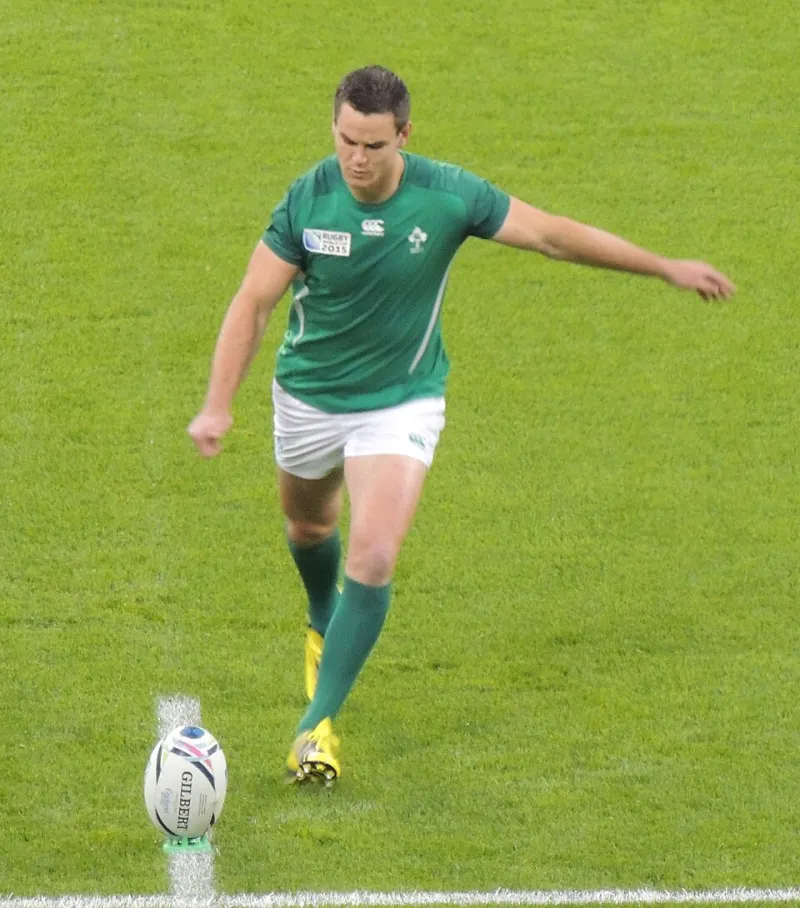
Photo: Warwick Gastinger, CC BY 2.0, via Wikimedia Commons
There's a moment in every retiring player's year that nobody films properly. The guard of honour has dispersed, the clubhouse has emptied, the kit bag is in the boot and someone is driving home on a ring road in the rain, wondering what the rest of the week is for.
For Pacific-island players who stay in the UK after rugby, that moment can stretch into months. The sport has become reasonably good at talking about transition. It's less good at doing it for people whose entire support structure — practical, emotional, spiritual and financial — was built around the game and the community that came with it.
The applause fades faster than the mortgage
A career ends on a fixture list. A life doesn't. Most retirement programmes are designed around an individual athlete: a course, a mentor, a CV workshop, a phone number for a counselling service. All useful. All built on an assumption that the person in question has a family network, local knowledge, savings and a professional identity to step into.
Many Pacific players in the UK have some of those things and not others. They may have arrived as teenagers, built a decade here, married locally, had children in a British hospital — and still be the only person in their family on this side of the world. When the contract stops, so does the structure that quietly substituted for an extended family.
Identity: when the job description was the whole thing
Ask a retired player what they do now and you can watch the pause. For a lot of Pacific families, rugby wasn't a hobby that got out of hand. It was the reason for a migration decision, the source of remittances, the thing a whole village back home followed on a grainy stream at 3am.
When that ends, there's often no soft landing, because the role was never only about the player. Being the one who made it is a heavy job title to hand back. Clubs can help by giving retiring players a function that isn't playing — coaching the colts, running the gym, mentoring the new arrivals — but that has to be a genuine role, not a ceremonial one.
The family ledger doesn't close on retirement
Remittances rarely stop when the contract does. School fees, church commitments, funeral costs and the expectation of support don't read the press release announcing your retirement. A player who has spent a career sending money home can find the transition years financially brutal, especially if a property purchase, a visa situation or a young family is also in the mix.
There's a dignity issue here too. Financial hardship in Pacific communities is often handled privately and within the family. A club that shouts about a hardship fund will reach nobody. One that quietly makes support normal, and lets a trusted person offer it, will reach plenty.
Isolation in a country that never quite stops being foreign
Isolation is the quiet one. A retired player might live in a town where the only Pacific families they know are the ones they met through rugby. When the rugby stops, the social calendar empties. Add a British winter, a long-term injury and a bit of pride, and you have a recipe for a very lonely January.
This is where the differences between a professional environment and a community club really show. A community club can offer something a performance programme can't: a reason to leave the house on a Tuesday, and people who will notice if you don't.
Where the current offer stops short
To be fair, the sport hasn't stood still. The Rugby Players' Association, Restart, the unions and a number of clubs have all built transition and wellbeing services, and the conversation around mental health is far more open than it was a decade ago. But most of it is still individualised and reactive — you have to know to ask, and you have to ask in a language and a register that suits you.
What's missing is the community layer. Nobody is coordinating the church, the club, the aunties, the local Pacific network and the careers adviser into one plan. In a village model, that coordination is the whole point.
What a village-shaped retirement offer actually looks like
It starts earlier than retirement, for one thing. A player should be building their post-rugby life from year three, not month three after the last game. Practical pieces:
- A named transition contact from the club or county who stays in touch for at least two years, not two weeks.
- A family conversation, not just a player conversation. Partners and parents often carry the real worries about money, schooling and visas.
- Financial planning that accounts for remittances rather than treating them as an optional extra.
- A route into local Pacific networks — churches, community associations, sevens tournaments, language groups — where the player isn't automatically the newest person in the room.
- A role at the club that's real, paid where possible, and reviewed rather than assumed.
- Mental health signposting that names the barriers: stigma, masculinity, language, and the fact that asking for help may feel like letting a whole family down.
The club's job doesn't end with the guard of honour
Here's the honest opinion bit. Rugby loves a farewell. It's much less comfortable with the messy, unstructured years afterwards, because they don't fit neatly into a season or a sponsorship deck.
But a community club has an advantage no academy can buy: it's still there on a wet Tuesday in February. If we're serious about player welfare — and Pacific Rugby Welfare exists because we think it's worth being serious about — then the village that welcomes a nineteen-year-old off a plane should still be standing when he's thirty-three and wondering what comes next.
The boots come off for everyone eventually. The trick is making sure the person doesn't come off with them.