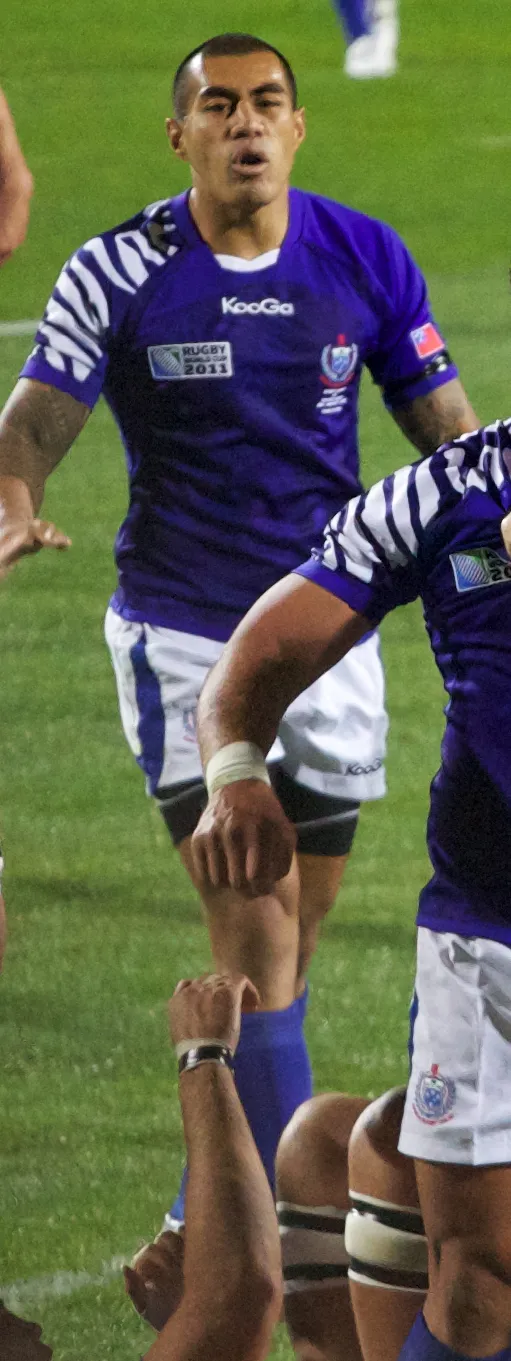
The Huddle After the Hit: Concussion Care That Works for Pacific Players
Photo: Northern Ireland Executive, CC BY 2.0, via Wikimedia Commons
Concussion care in community rugby has come a long way. The pitch-side cards are clearer, the return-to-play steps are better known, and most clubs can recite the 'if in doubt, sit them out' line without checking the poster. But protocols only work when the player in front of you understands them, trusts them and feels able to follow them. For Pacific players settling into UK clubs, that last part can take a bit more thought.
Trust Is the First Protocol
A Pacific player who has been taught to get up, shake it off and get back in the line may not see a headache as a reason to come off. That is not naivety. It is often a mix of stoicism, team loyalty and the very reasonable fear of being seen as unreliable in a new club. Add a language barrier, an unfamiliar medical system and a family back home who want to know he is OK, and a straightforward head knock becomes a welfare question, not just a medical one.
The answer is not to treat Pacific players as a special case to be managed. It is to make the ordinary concussion pathway more human, more clearly explained and more connected to the people a player actually listens to.
Baseline Testing Without the Jargon
Pre-season baseline testing is one of the most useful tools a club has. But a baseline test that nobody explains is just a form with funny words on it. Before the season starts, take ten minutes to walk a player through what the test is for, what the scores mean and why it matters later. If English is not their first language, use a translator — a teammate, a club volunteer or a family member the player trusts. Do not rely on a nod and a thumbs-up.
Keep the language simple: 'This is a picture of how your brain works when you are well. If you get a knock later, we compare it to this.' That is usually enough. Avoid acronyms where you can. If you must use them, write them down.
Bring the Family Into the Conversation
For many Pacific players, family is not a separate support system — it is the support system. A club that rings the player's partner, parents or a senior relative after a head injury is not being intrusive. It is being sensible. Ask the player first who they want kept in the loop, then keep them in it.
That might mean a short call to a partner explaining the return-to-play steps, or a message to an older sibling who is the family's main point of contact. It also means respecting that some players will not want to worry family back home. In that case, agree together what gets shared and when. The aim is not to hand responsibility to the family. It is to make sure the player is not carrying the worry alone.
Follow-Up That Actually Follows Up
The weakest part of most concussion plans is the gap between the clinic and the next training session. A player is told to rest, avoid screens and come back when they feel better. Then real life kicks in: work, travel, a crowded house, a phone that will not stop buzzing.
Clubs can close that gap without turning into a medical provider. Nominate one person — a welfare lead, a coach or a willing volunteer — to check in on day one, day three and day seven. Keep it casual: 'How are the headaches? Sleep OK? Any dizziness on the stairs?' Write it down. If symptoms are not settling, point them back to the GP or the NHS 111 service rather than guessing.
For Pacific players who live in shared housing or with relatives, ask whether they have a quiet room to rest in. Sometimes the practical fix is as simple as a pair of earplugs and an agreed hour away from the family sitting room.
A Word on Stoicism
There is a fine line between respecting a player's toughness and colluding with a culture of silence. The club's job is not to lecture anyone about their upbringing. It is to make the safe option the easy option. That means coaches saying clearly: 'If you tell me you have a headache, you are not letting me down. You are doing your job.' It means senior players backing that up. And it means never rolling eyes at a player who comes off.
Small Club, Workable Plan
You do not need a full-time medic to do this well. A one-page concussion plan that includes an interpreter contact, a family contact and a named follow-up person is worth more than a glossy folder nobody opens. Review it after every head injury. Ask the player what worked and what felt awkward. Then adjust.
Concussion care is not about wrapping Pacific players in cotton wool. It is about making sure the huddle after the hit is as strong as the one before kick-off.