A Seat at the Training Table: Welfare That Actually Fits Pacific Women and Girls

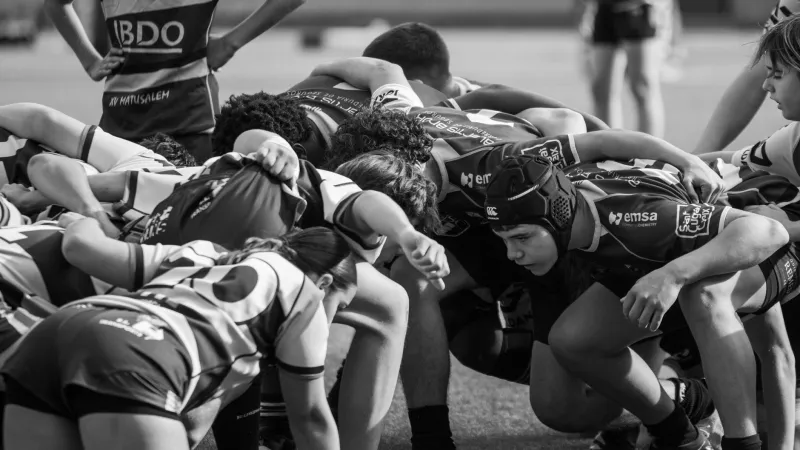
Photo: World Rugby, Public domain, via Wikimedia Commons
Most club welfare plans start with a familiar list: a contact number, a housing check, a lifts rota, a reminder about the club welfare officer. Good things, all of them. But too often they are written with the men’s first team in mind and then stretched to fit everyone else. For Pacific women and girls in UK club rugby, that stretch shows. Welfare becomes an add-on rather than a foundation.
The fix is not to bolt on a separate women’s page to the club handbook and call it done. It is to build welfare from the room out — with the whole squad in view from the start.
Start with the room, not the leaflet
Before a club writes another checklist, it should ask a simpler question: who is actually in the room? Not just on match days, but at training, in the clubhouse, on the minibus and in the group chats. Pacific women and girls may be players, coaches, volunteers, mums, students, church members and family carers all at once. Their welfare needs are not a smaller version of the men’s.
Clubs should hold listening sessions specifically for women and girls, ideally led by someone they trust. Not a big formal meeting after training, but a cup of tea, a quiet room and honest questions. What makes you feel safe here? What makes you feel like a guest? What would you never say in front of the whole committee? The answers will be more useful than any template.
Cultural humility matters. Pacific communities are not one thing, and neither are Pacific women. A Tongan player, a Samoan player, a Fijian player and a player from a mixed heritage family may share some expectations and differ on plenty. Ask rather than assume. And where family is central — as it often is — make space for family conversations without making a player feel watched.
Housing and travel are not neutral
A safe house is not just a roof. For a young Pacific woman arriving in a UK club, it is location, housemates, locks, heating, internet, transport and a way out if something goes wrong. Clubs should check who else lives there, whether the player has her own room, how she gets to training after dark and what happens if a lift falls through.
The same goes for travel. A packed minibus after a late away game is not automatically a safe space. Clubs should ask whether women and girls have a female contact on the trip, whether drop-offs are sensible, and whether younger players have clear parent or guardian arrangements. For under-18s, safeguarding is not optional paperwork. It is the difference between a good season and a bad story.
It is also worth naming the awkward stuff. Shared hotel rooms, changing facilities, late-night car shares and informal lift arrangements should all be checked with the players themselves. A club that says “we’ve always done it this way” is usually a club that has not asked who the way works for.
Health beyond the ice bath
Welfare for Pacific women and girls has to include health in practical, unembarrassed terms. Period products in the changing rooms. A confidential route to ask about menstrual health, contraception or GP access. Clear information about what the club will keep private and what it will not.
Maternal health deserves proper attention too. A player who is pregnant, returning after birth or managing childcare should not feel like a problem to be managed. Clubs should know how to have the conversation, who to involve and how to adapt training. That might mean signposting to NHS services, adjusting timings or simply not treating pregnancy as the end of a rugby story.
Language support matters here as well. A Pacific player may understand rugby instructions perfectly and still struggle in a GP appointment. A club can help by offering an interpreter, a trusted person to attend appointments or written information in plain English. Small acts of admin can be big acts of care.
Childcare and the Sunday rhythm
Many Pacific women and girls carry family responsibilities that do not appear on a team sheet. Childcare, church commitments, cooking, caring for elders and supporting younger relatives are real parts of life. A training time that ignores those realities is not neutral; it quietly tells some players they do not belong.
Clubs can be creative. A creche or child-friendly space at the clubhouse. Earlier sessions. Shared lifts. A named contact for parents. Flexibility around church on Sundays. None of this needs to be expensive, but it does need to be planned rather than improvised.
The same applies to hospitality. A post-match meal that assumes everyone can stay late, drink or travel home alone is not hospitality for everyone. Ask what works. Then adjust.
Culture, family and expectation
Pacific women and girls may face particular pressures around modesty, reputation, family duty and community expectation. Those pressures are not for clubs to judge. They are for clubs to understand. A welfare officer who knows when to involve family, when to keep confidence and when to step back is worth more than a shelf of policies.
Recruitment is part of this. Informal recruiters, social media promises and word-of-mouth deals can leave women and girls exposed. Clubs should have a clear, visible process for recruitment, with safeguarding checks, named contacts and a female welfare point of contact. If a promise is made in a DM, it should be written down and checked before anyone packs a bag.
Pathways, not afterthoughts
Welfare is also about what happens after the final whistle. Pacific women and girls should see a route into coaching, refereeing, club leadership and paid roles. Not as a box-ticking exercise, but as a real pathway with mentoring and support. Representation in the committee room changes the questions that get asked.
A club that wants welfare to fit the whole squad should look at who makes decisions. If the answer is a room full of men, the welfare plan will show it.
A practical place to start
Clubs do not need a perfect strategy to begin. They need a few honest steps:
- Hold a women-and-girls listening session, separate from the men’s team.
- Review housing and travel arrangements with the players who use them.
- Put period products in every changing room and name a confidential health contact.
- Check childcare, church and family commitments before setting training times.
- Make safeguarding and recruitment processes visible, not buried in a folder.
- Create at least one mentoring route into coaching or club leadership.
- Ask again next season. Welfare is not a one-off audit.
Pacific women and girls are not asking for special treatment. They are asking for welfare that sees them. That starts with a seat at the training table — and a club willing to listen when they speak.